Buy Flow Redesign
Ticket buying for the Formula 1 Miami Grand Prix took 12 steps and pushed fans off to Ticketmaster to finish. I facilitated a four-day design sprint that cut it to four steps and kept the whole purchase on our own site.
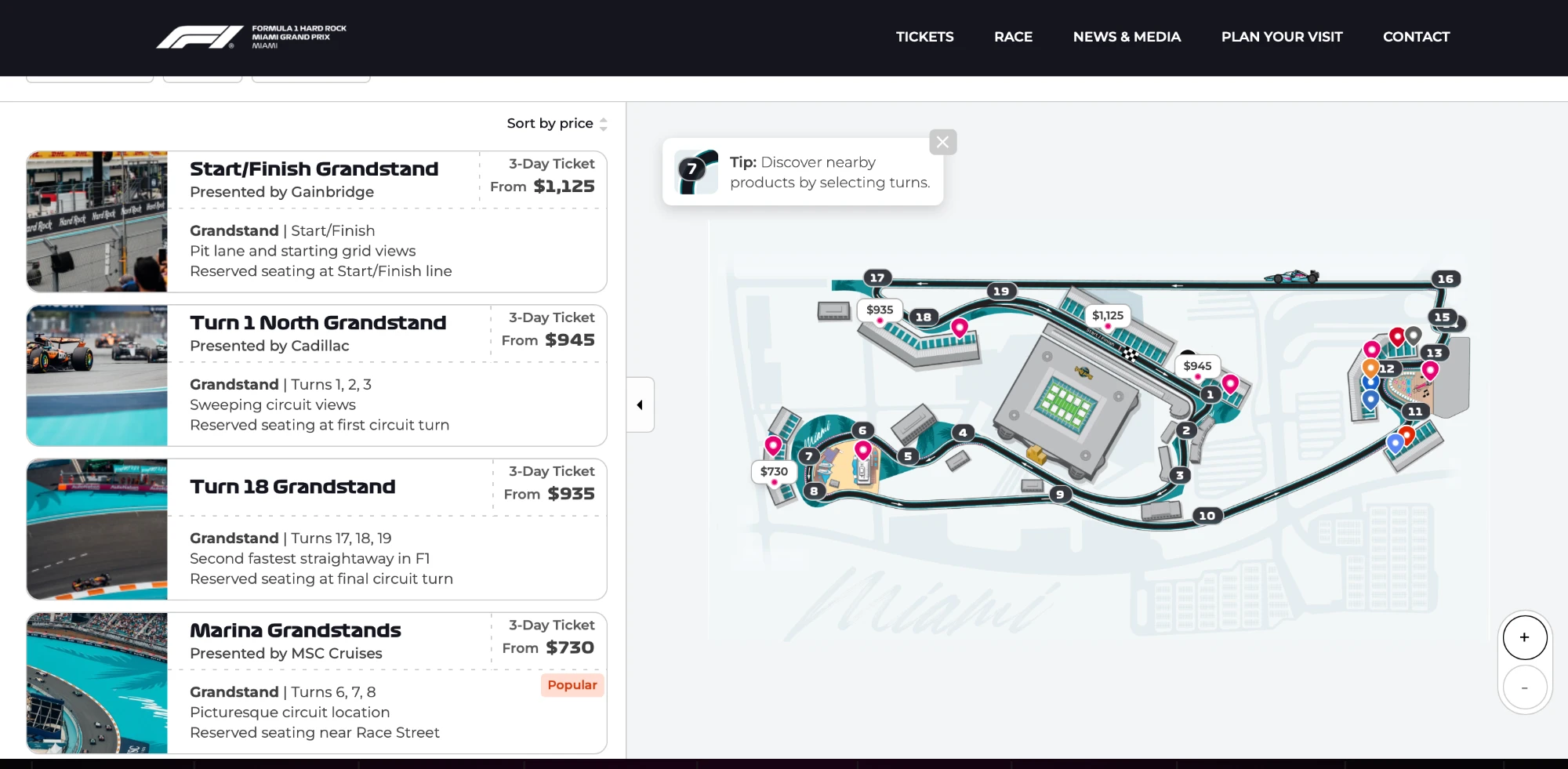
Overview.
Buying a ticket took 12 steps and ended on someone else's site. I ran a four-day design sprint across web, UX, engineering, and business teams, built a prototype, and pitched it to the CEO. It was approved, built, and shipped as one of two Ticketmaster API integrations worldwide at the time.
More Efficient Checkout — steps cut from 12 to 4
Successful Transactions
NPS Score from Site Metrics
Conversion Rate Lift
The Challenge
Twelve steps, and the last ones weren't even ours.
Fans buying tickets for the Grand Prix moved through 12 steps to complete a purchase, and partway through they were handed off to Ticketmaster to finish paying. The handoff broke the experience, cost us the checkout data, and gave people more chances to abandon the purchase. The brief was to get it to five steps or fewer without sending anyone off-site.
- Cut a 12-step purchase down to five or fewer
- Keep the user experience in one domain instead of sending them out to complete the journey
- Work inside Ticketmaster's inventory and ticketing system
- Get alignment from web, UX, engineering, and the business verticals
The Design Sprint
Four days, one prototype, one decision.
I proposed the sprint to my manager and facilitated all four days, running a process inspired by Sprint by Jake Knapp and John Zeratsky — a method already proven at Google and YouTube. I pulled in the web development, UX/UI, and engineering teams, and interviewed experts from the business verticals who each owned a piece of the ticketing experience.
We mapped the current flow, ran How Might We and lightning demos, sketched competing solutions, voted on a direction, and built a prototype by day four. My team and I pitched it to the CEO in a deck, and the project was approved to build.
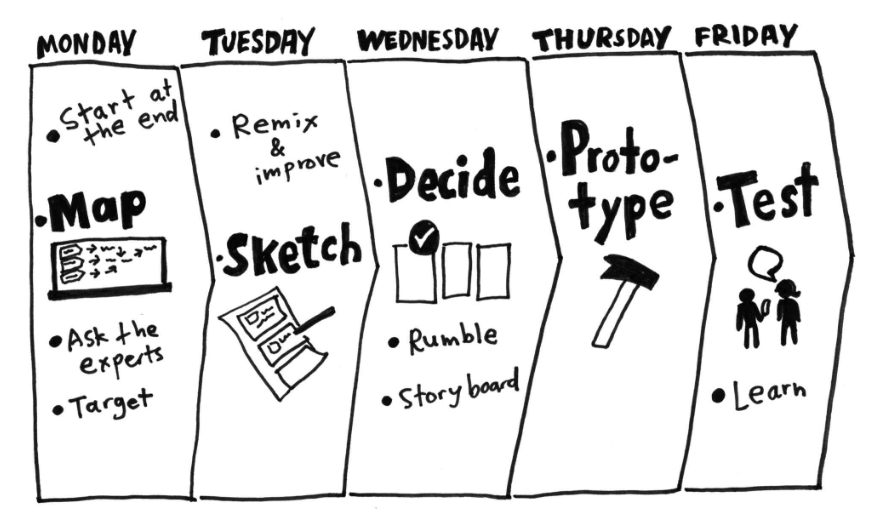
Sprint Activities
From Prototype to Launch
Shipping a checkout Ticketmaster doesn't normally allow.
With the sprint approved, we partnered with a third-party development team to build it faster than our own headcount allowed. I coordinated between that team and ours, keeping the built flow true to what the sprint decided.
The hard part was the integration. It was very challenging given its unprecedented nature, and ours became one of only two such integrations worldwide at the time. That's what let fans browse, select, and pay without ever leaving the Grand Prix site.
Outcome
The redesigned flow launched at four steps, down from 12, with checkout fully on our own site. Our team partnered with others in the organization to test the new flow against the old one, and it converted better: keeping people on our site beat handing them to Ticketmaster.
We kept the work user-centered after launch rather than calling it done at the pitch. We ran usability tests on the new flow, watched time on task, and ran A/B tests to measure performance between variations of the page. We also used session replay to observe where people hesitated or backtracked, so we could pinpoint real points of friction instead of guessing at them. The redesigned flow converted roughly 15% better than the old one.
Owning the flow also meant owning the data behind it, so the business could finally see where buyers dropped off and keep tuning the experience from real behavior instead of guesswork.
Let's Talk
Pick a message, leave your email, and I'll reach out.